When do I need a knee replacement?
Knee Replacement
Partial & Total Knee Replacement Surgery
For patients with arthritis that no longer responds to non-operative care, knee replacement surgery reliably relieves pain and restores function — tailored to the pattern and severity of your wear.
Key points
- Partial knee replacement for isolated single-compartment arthritis
- Total knee replacement for advanced or multi-compartment arthritis
- Modern implants with bone-preserving techniques
- Enhanced recovery pathway for faster return to activity
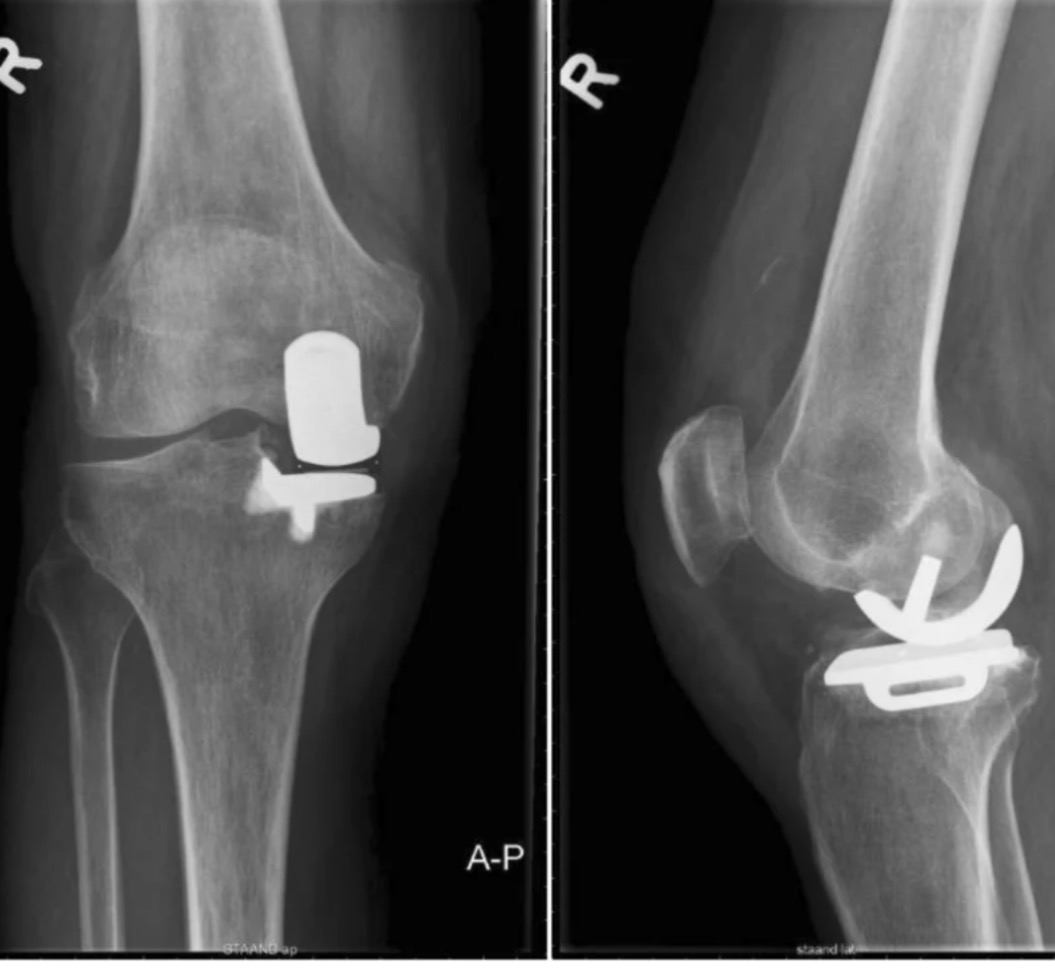
Partial knee replacement
What is a Partial knee replacement
- Can you pinpoint your knee pain – would you benefit from just half a knee replacement and not a full one?
- Why remove parts of your knee that don’t cause you pain and aren’t worn out! If you can pinpoint pain to just one of the 3 compartments of your knee and the X-rays and MRI scan correspond to this, it is much better for you to only replace that single area.
- This usually allows a much quicker recovery, smaller incision and better function after surgery.
Your journey
What to expect when undergoing a partial knee replacement
Surgery
Daycase or overnight
Uniknees can be performed as daycase operations (home the same day) or with one overnight stay in hospital.
2 weeks
Wound check
You’ll be seen two weeks after your surgery to check the wound.
4 – 6 weeks
Crutches
You will require crutches for 4–6 weeks.
6 – 8 weeks
Review in Clinic
Reviewed to ensure you have a good range of movement, with ongoing physiotherapy available as required from 6 weeks.
1 year
Final review
All being well, I will then see you at 1 year after surgery.
If you have any problems with your knee in between please don’t hesitate to contact me.
Total Knee Replacements
Total Knee Replacements
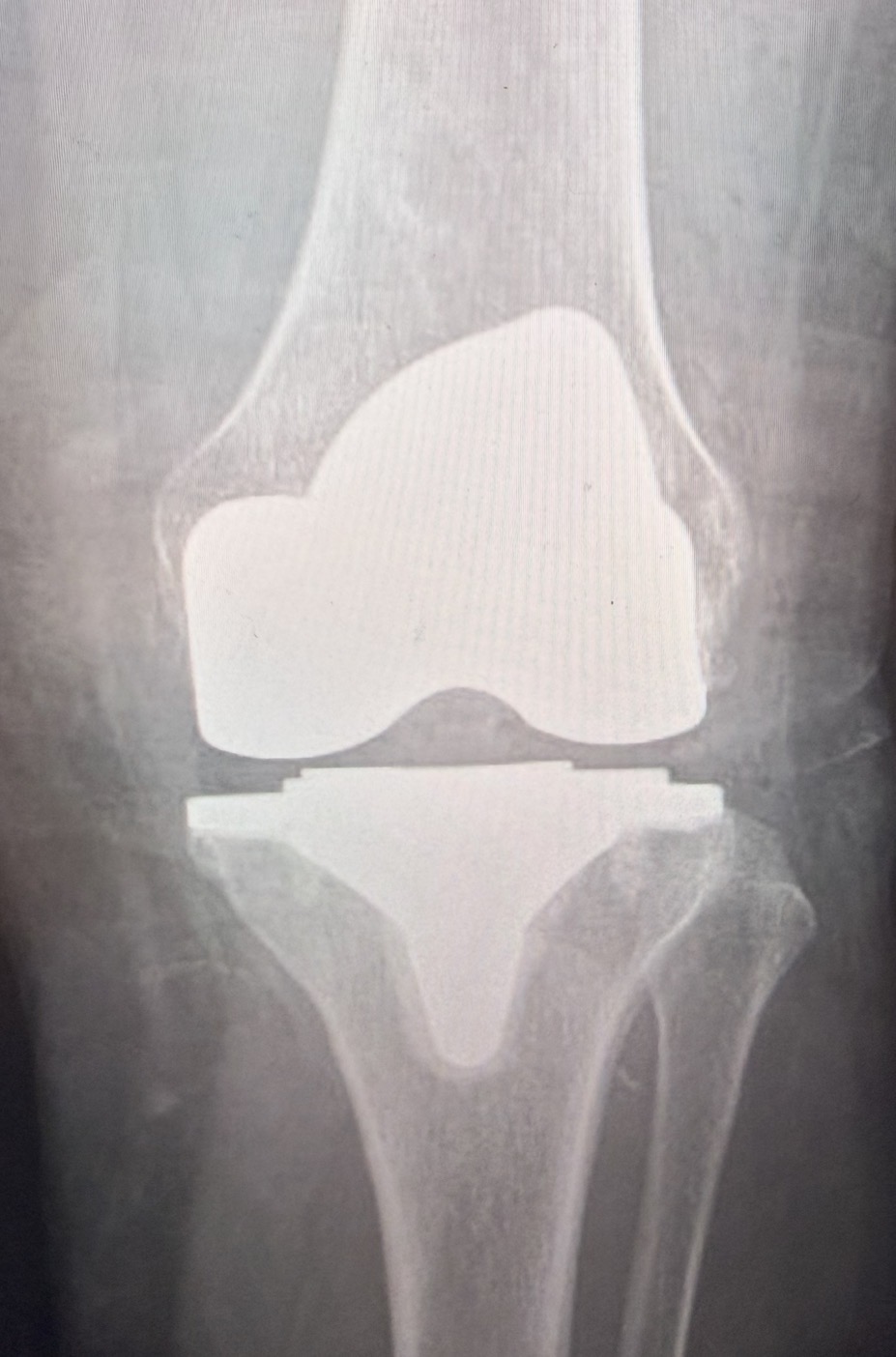
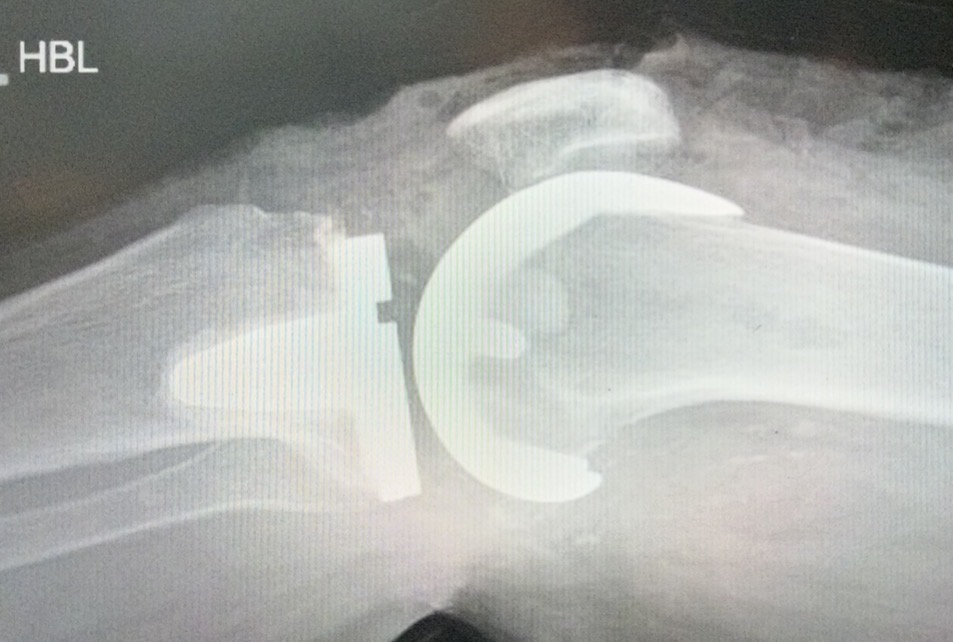
I would advise a TKR when more than one compartment is severely affected. I will only resurface your kneecap (the third compartment) when indicated.
When and why a total knee replacement is used
A total knee replacement is usually recommended when arthritis affects more than one compartment of the knee, or when the whole joint is severely worn. The most common reason is osteoarthritis, but it is also used for rheumatoid and other inflammatory arthritis, and occasionally after significant injury to the joint.
I would normally only consider a TKR once non-surgical measures — such as activity modification, weight management, physiotherapy, painkillers, anti-inflammatory medication and injections — are no longer controlling your symptoms. The right time for surgery is when persistent pain, stiffness and loss of function are significantly affecting your quality of life, sleep, mobility and independence. The goal is to relieve pain, correct deformity (for example a bowed or knock-kneed leg) and restore a stable, well-aligned and well-functioning knee.
What are they made of?
A modern total knee replacement resurfaces the worn ends of the bone with a small number of precisely engineered components. The femoral (thigh-bone) component is typically made of a cobalt-chrome metal alloy, and the tibial (shin-bone) baseplate is made of titanium or cobalt-chrome. Between them sits a hard-wearing medical-grade plastic (polyethylene) spacer that acts as the new smooth bearing surface. If your kneecap is resurfaced, this is also done with a polyethylene button. The components are usually held in place with bone cement.
Surgery and Rehab
Surgery
1 – 2 nights
TKR patients typically stay 1–2 nights in hospital.
4 – 6 weeks
Crutches
You will require crutches for 4–6 weeks.
6 weeks
Clinic review
Reviewed in clinic to ensure your movement is satisfactory. Physiotherapy with strengthening techniques to increase your range of motion, bending and straightening as much as possible.
12 weeks
Straightening goal
You have 12 weeks post surgery to get your knee as straight as possible.
12 months
Final review
I will then see you at 12 months post surgery hopefully for a final review.
12 – 18 months
Full benefits
It takes 12–18 months to see the full benefits of the TKR.
Informed consent
Benefits and Risks of Knee Replacement Surgery
Understanding the potential benefits and risks helps you make an informed decision about your treatment. Mr Rehmatullah will discuss these in detail at your consultation.
Benefits
- •Reduce pain
- •Improve mobility
Risks
- •Infection
- •Bleeding
- •Nerve damage
- •Blood clots in legs and lungs
- •Stiffness
- •Loosening
- •Fracture
- •Further surgery
- •Loosening of implants
- •20% ongoing pain
- •Amputation
- •Dislocation of insert (uniknees only)
Important points after surgery
- Driving: Not insured for 6 weeks minimum from the date of surgery.
- Flying: Advise not to fly for 3 months after surgery due to increased risk of blood clots.
After surgery if you or anyone have concerns about your wound please contact my secretary or myself and do not start any antibiotics unless advised by myself.