Why an osteotomy and not a knee replacement?
Realignment Surgery
High Tibial Osteotomy & Distal Femoral Osteotomy
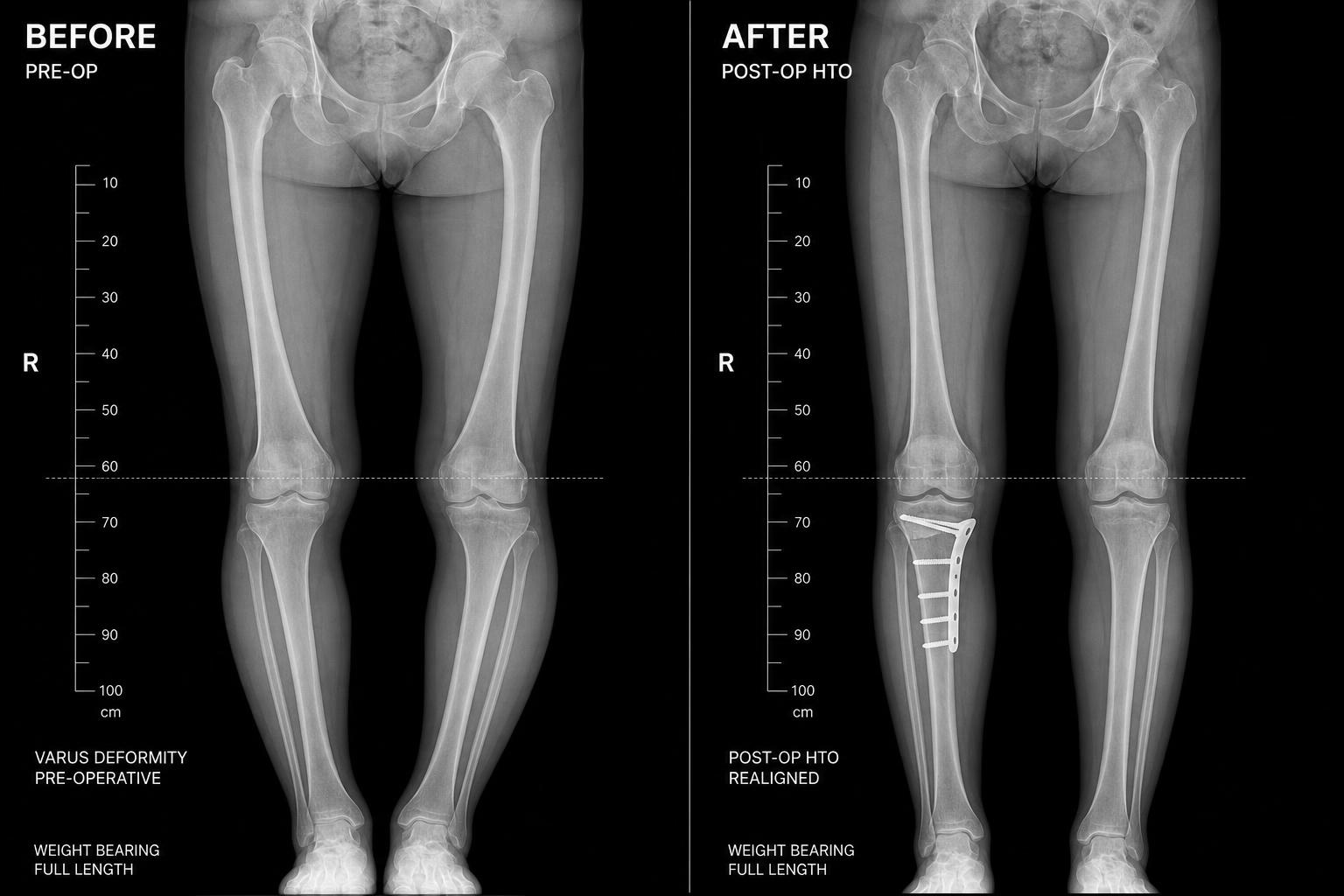
Realignment surgery (HTO and DFO) shifts load away from the worn or damaged compartment of the knee — relieving pain, protecting cartilage and delaying the need for joint replacement.
Key points
- Do you want to avoid a knee replacement?
- Do you have one-sided knee pain?
- Do your knees bend inwards or outwards?
- Are you highly active? Want to remain that way?
- You must be a non-smoker
Indications
- One sided knee pain
- Protect cartilage and cartilage surgery
- Correct mal alignment of leg to reduce symptoms (reduce pain, help treat patella dislocations)
Offloader Braces
Offloader Braces
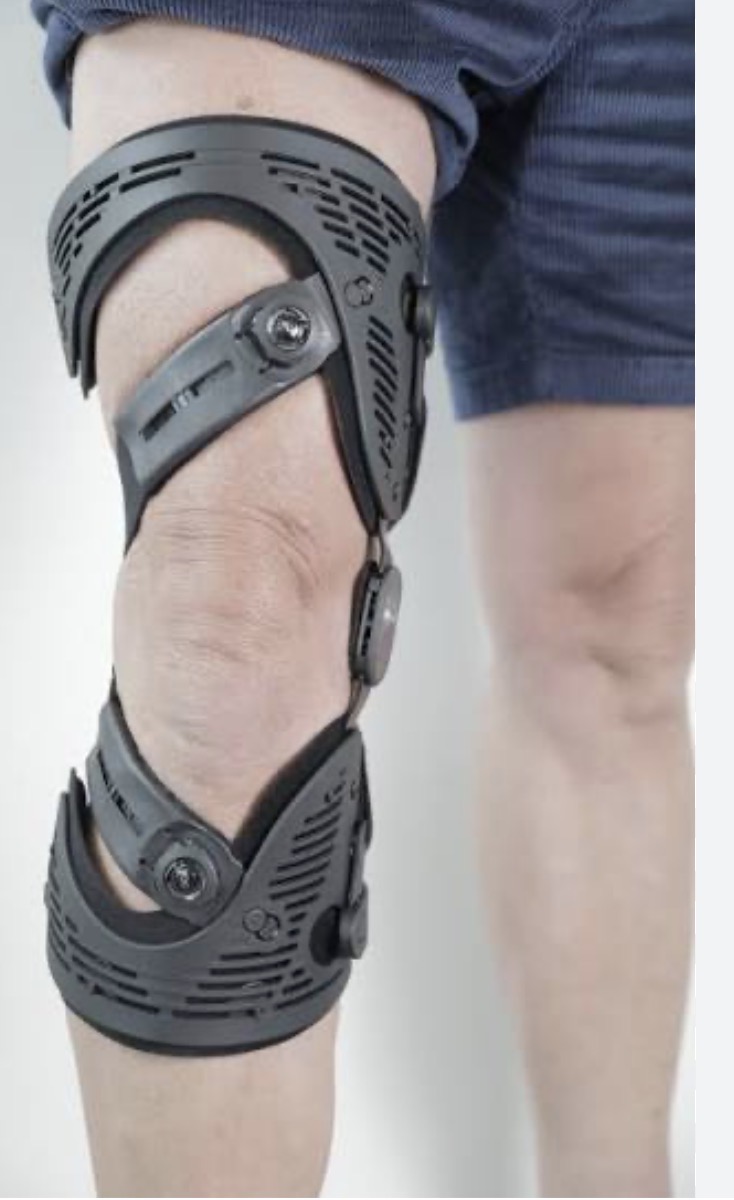
I use offloader braces to help determine whether an osteotomy is likely to work for you. By shifting weight away from the damaged compartment of the knee, these braces can also provide meaningful pain relief and improved function.
If you experience noticeable benefit from wearing an offloader brace, this is a positive predictor that realignment surgery is likely to be successful. We can discuss brace options during your consultation.
Recovery
Surgery and Rehab for Osteotomies
One or two nights in hospital is expected with an osteotomy. I would often perform a knee arthroscopy at the same time to ensure the non-affected side of your knee is still suitable for the osteotomy and to be able to sort out any meniscal or cartilage issues.
0 – 6 weeks
Early recovery
Physiotherapy will be provided and you will need crutches and movement advice. You will be either partially or fully weight bearing from day 1 after surgery. Clinic appointment at 6 weeks with a new X-ray to check the correction.
6 weeks – 3 months
Progression
Increase weight bearing to full, if not already. Re-X-ray the osteotomy site to ensure healing.
6 months
Healing review
Review you in clinic with a further X-ray to ensure fully healed.
18 months
Plate removal
Remove the plate.
Informed consent
Benefits and Risks of Osteotomies
Understanding the potential benefits and risks helps you make an informed decision about your treatment. Mr Rehmatullah will discuss these in detail at your consultation.
Benefits
- •Reduce pain
- •Slow down arthritis progression
- •Allow you to remain active for longer
Risks
- •Infection
- •Bleeding
- •Nerve damage (numbness over front and inside of your leg)
- •Blood clot in leg and lungs
- •Non union
- •Delayed union
- •Mal union
- •Further surgery
- •Fracture
- •Scars
Important points after surgery
- You are not able to drive for a minimum of six weeks.
- You are not able to fly for three months after the date of surgery.
After surgery if you or anyone have concerns about your wound please contact my secretary or myself and do not start any antibiotics unless advised by myself.